Movement Explained
You Have 30 Minutes to Exercise. What Actually Matters?
From a brisk walk to a few compound lifts, make limited exercise time count with the right challenge, good technique, and consistency.
You're busy, time is short, but you still want to exercise and do something beneficial for your health. Maybe you have 30 minutes between meetings, before work, or at the end of a long day. You want to make those minutes count, but where do you start? Cardio? Weights? High-intensity intervals? A full-body workout?
The answer depends on where you are in your exercise journey, what you're trying to accomplish, and what you're capable of doing safely. Thirty minutes can be plenty of time to get meaningful exercise, but how you use those minutes matters. Here are a few things worth thinking about.
Start where you are, not where you think you should be
If you're just beginning to exercise, something as simple as walking for 30 minutes can be an excellent place to start. That might sound too easy, but walking has meaningful health benefits, particularly if you're transitioning from a sedentary lifestyle. You can get outside, enjoy sunlight, spend time in nature, listen to a podcast, or simply take a break from the responsibilities of the day. If you walk briskly enough to raise your breathing and heart rate, you're also improving your aerobic fitness.
Walking offers plenty of room to progress. Start at a comfortable pace, then try intervals: five minutes of brisk walking followed by two minutes at your usual pace. Increase the faster portions, introduce hills, or pick up the overall pace as your fitness improves. Weighted vests are an option for some people later, but aren't necessary and should be introduced cautiously. If you're interested in running, alternate easy jogging with walking, gradually increasing the running portions. The same approach works for cycling, rowing, swimming, the elliptical, or stairs. The important concept is progression: start at a suitable level and increase the challenge as your body adapts.
If you're lifting weights, prioritize useful movement patterns
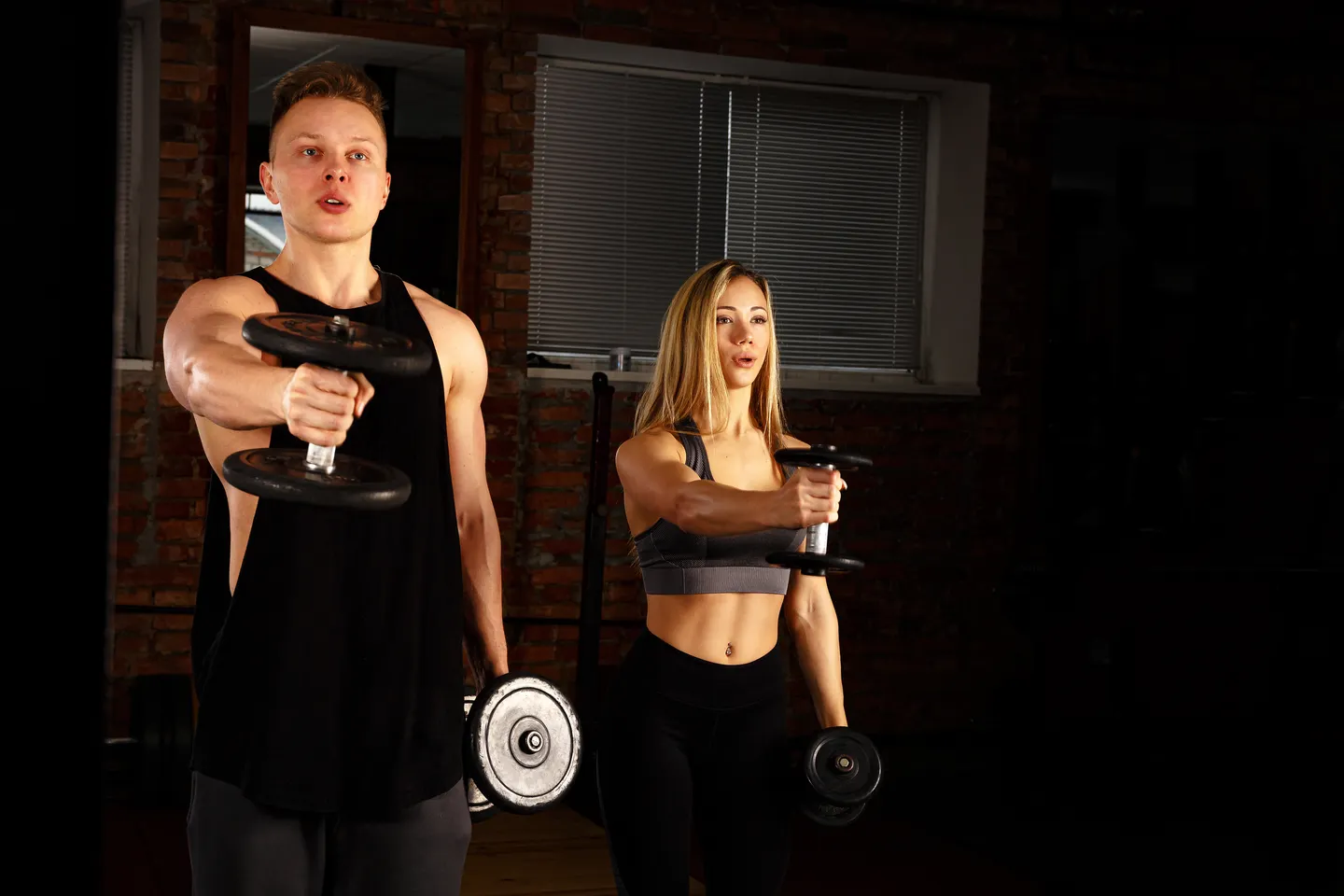
Thirty minutes can also be productive for strength training. One way to make efficient use of time is with compound movements, exercises that recruit several muscle groups and joints. For general functional strength, think about five movement patterns: squatting, hinging, pushing, pulling, and carrying.
A squat involves lowering and raising your body through the hips and knees, like a bodyweight squat or goblet squat. A hinge involves moving at the hips, as with a deadlift or Romanian deadlift. Pushing movements include bench presses, push-ups, and overhead presses, while pulls include rows, pull-ups, and lat pulldowns. Farmer's carries challenge your grip, trunk, and ability to control your body while walking under load. These patterns provide a foundation for general strength, although isolation exercises also have a place depending on your goals.
Some movements are technically demanding, particularly with heavier weights. Learn technique, start with manageable loads, and progress gradually; a qualified coach can help. Another way to save time is with supersets: alternate between two exercises rather than completing all sets of one before switching. You might pair squats with rows, a hinge with a bench or shoulder press, or carries with a core movement. Alternating movement patterns can allow one muscle group to recover while another works, without rushing your exercise technique.
Sets, repetitions, and intensity still matter
When time is limited, people often assume they need to perform as many repetitions as possible with little rest, but that isn't necessarily the best approach. The right repetitions depend on your goal, resistance, and how challenging the movement feels. Two sets of 10–12 repetitions or three sets of eight can be useful. You don't need dozens of exercises; a few appropriately selected movements with sufficient effort and good technique can accomplish quite a bit.
If you finish a set of 12 and feel you could easily do 15 more, you may not be challenging your muscles enough to maximize progress. But you don't have to push every set to failure, especially when starting out. Rest matters as well. Heavy, demanding sets of three to five repetitions often require longer recovery, sometimes two to five minutes. Moderate-resistance workouts may allow shorter breaks. They're different tools for different goals. With only 30 minutes, choose fewer exercises or sets rather than sacrifice quality.
What if you want both cardio and strength?
Circuit-style resistance training may work if you want to lift weights and raise your heart rate. Instead of tracking sets and repetitions, organize exercises into timed intervals. You could alternate a squat and a pulling movement every 30–60 seconds for several minutes, taking brief rests when needed, then move to a hinge with a push, followed by carries and a core exercise. With manageable resistance and shorter breaks, you challenge muscles while increasing cardiovascular demand.
But getting your heart rate up during a lifting workout isn't necessarily the same as improving aerobic fitness through dedicated cardiovascular training. Circuit training can offer conditioning benefits, yet sustained aerobic work and structured intervals offer different stimuli. If cardiorespiratory fitness is a priority, add dedicated aerobic sessions elsewhere in the week. And don't eliminate rest just to keep your heart rate elevated. If fatigue causes your technique to deteriorate, you've lost the movement quality we're looking for.
Think about your week, not just one workout
You don't need to accomplish every fitness goal in every 30-minute session. Maybe Monday is strength training, Tuesday a brisk walk or Zone 2 cardio, Wednesday another strength session, and other days some intervals, mobility, or simply outdoor movement. Current physical activity recommendations for adults generally suggest at least 150 minutes of moderate-intensity aerobic activity per week (or an equivalent vigorous amount), along with muscle-strengthening activity at least twice weekly. Spread that activity across the week in whatever way fits your schedule and abilities. One 30-minute session doesn't need to be perfect or all-inclusive; it just needs to contribute to your goals.
The bigger picture
There's no single best way to spend 30 minutes exercising. Someone who hasn't exercised in years may benefit tremendously from a brisk walk. Someone with an established aerobic base may want intervals. Someone focused on strength may benefit more from a few compound lifts with adequate resistance and recovery. Experiment, gradually progress, and seek help when you need it.
Above all, remember quality and consistency. You don't need the perfect workout or hours in the gym. You need an approach that's appropriate for your goals, challenging enough to make progress, and repeatable over time. Thirty minutes is enough to do something meaningful for your health. The key is making those minutes count.
References
Editorial Note
This article was developed from original physician-authored content, with AI assistance for editing, clarity, grammar, and supporting research. All content is reviewed for medical accuracy, edited, and approved by the physician before publication. The medical perspectives, interpretations, and conclusions remain those of the physician.