
The Executive Health Report.
This sample shows one way your physician can bring findings and priorities together. A written report may be included in your custom workup when useful; the health areas assessed, format, and follow-up are agreed individually. Not every patient needs every test or section shown here.
A closer look at four sections.
These four pages give you a sense of the structure and depth — from the overall score to the priority action plan you leave with.
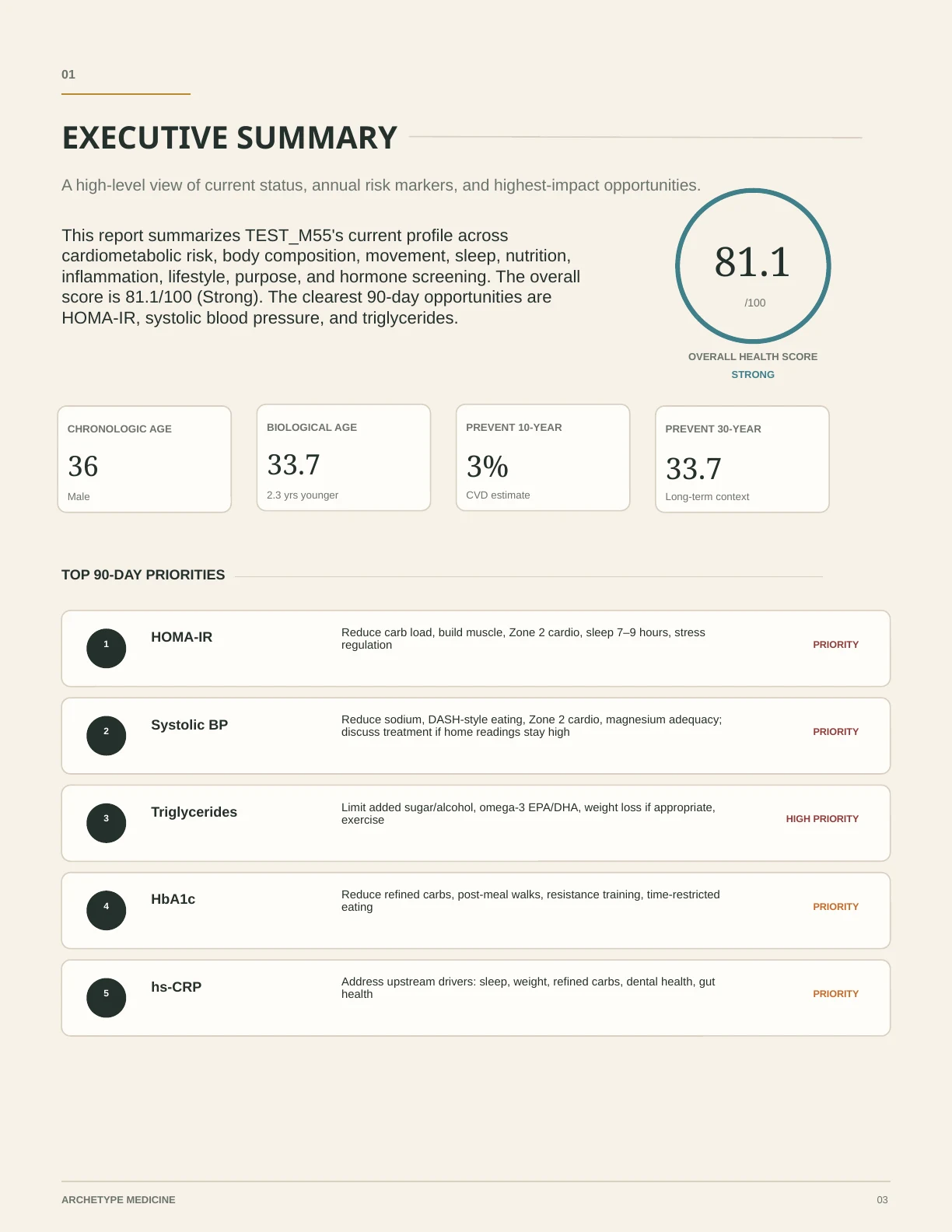
Executive Summary
One page, the full picture. Overall score, biological age, PREVENT 10- and 30-year cardiovascular risk, and the five highest-priority drivers — each tied to a specific first action.
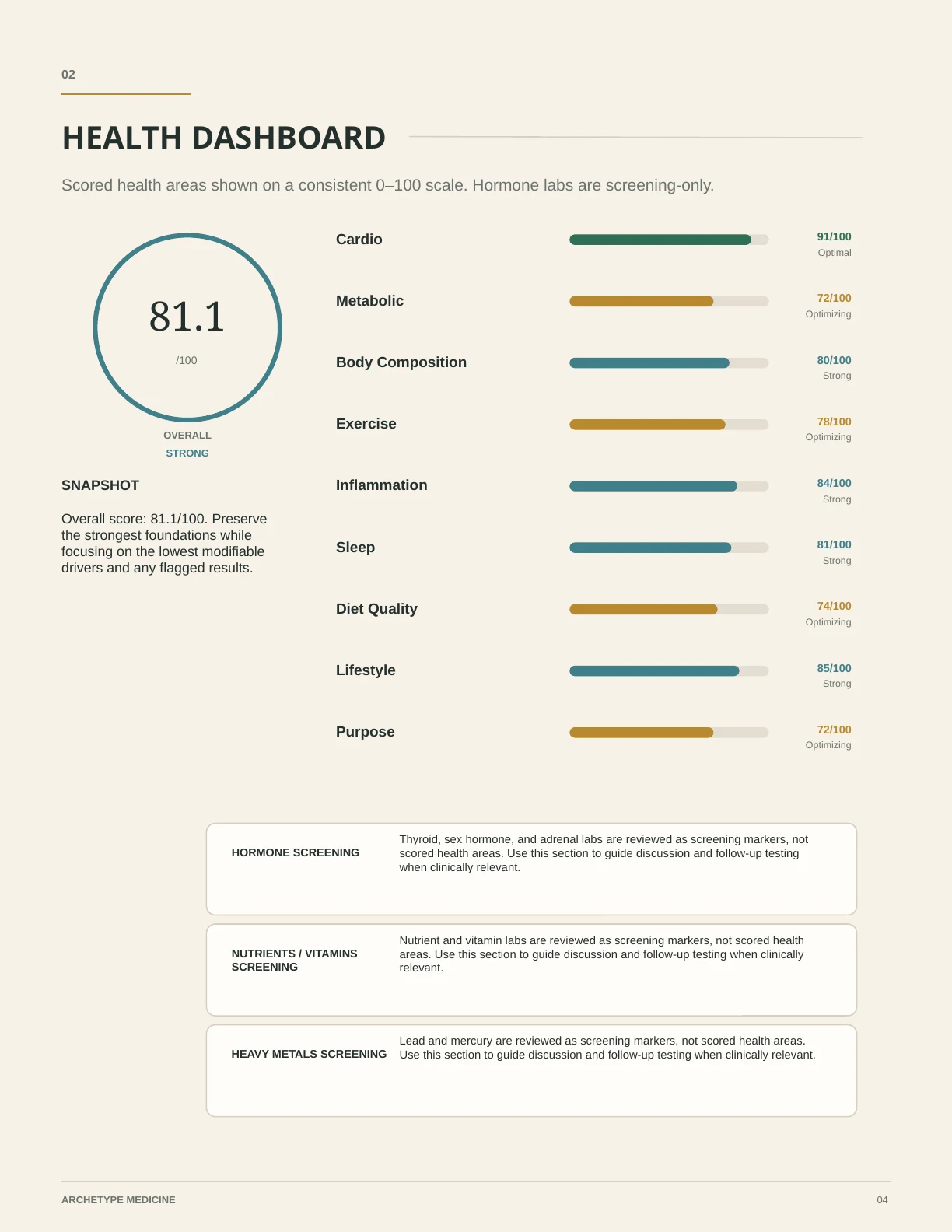
Health Dashboard
Nine health domains scored on a consistent 0–100 scale. The dashboard shows where the foundations are strong, which areas have room to move, and how they rank relative to each other.

Health Authorship
A patient-completed reflection on why they're doing this, where their health has been, where it stands today, and where they want it to go — closing with a first-person Authorship Statement that helps the physician personalize the plan.
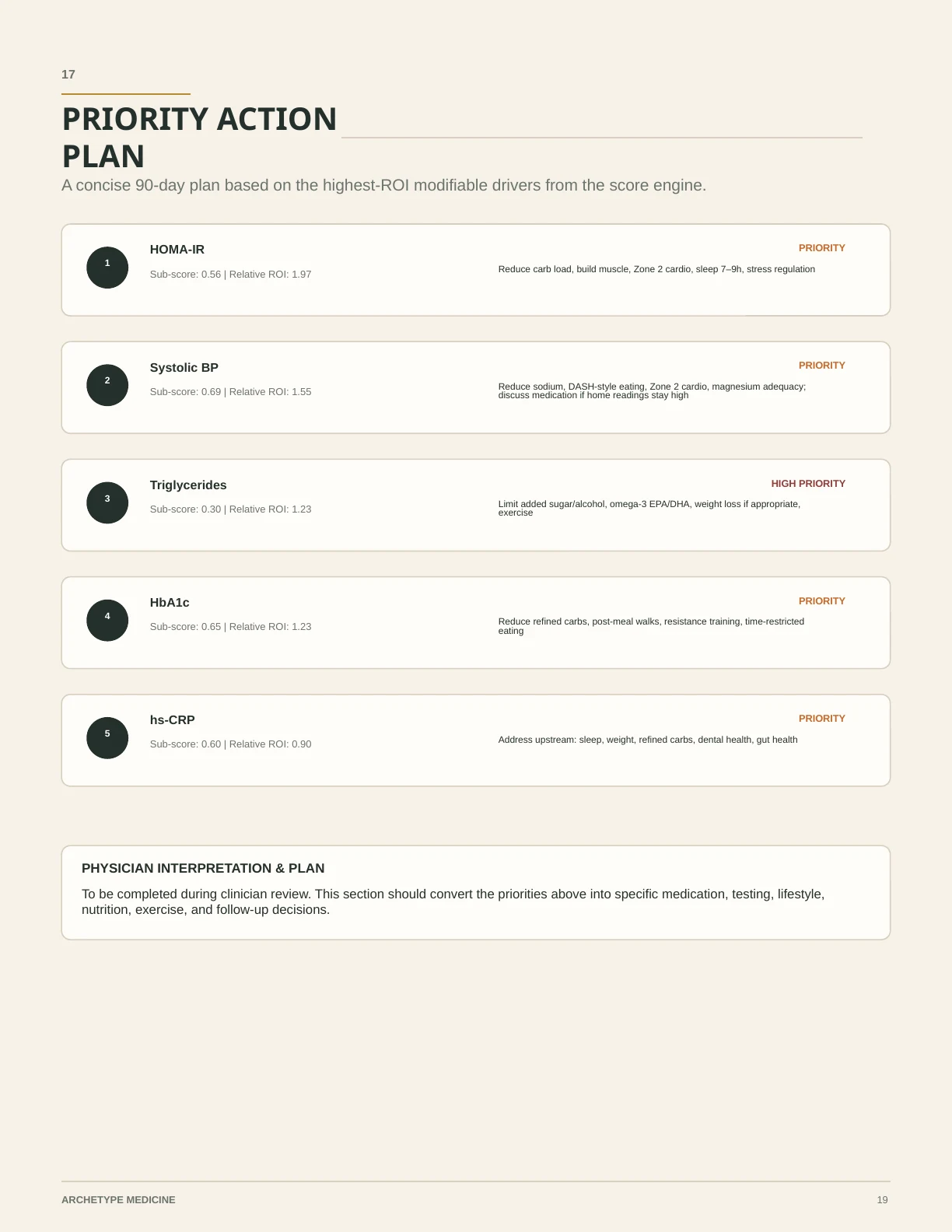
Priority Action Plan
The five highest-leverage actions, ranked by clinical impact. Each includes a current value, target, urgency label, and specific steps to take in the next 90 days.
Five more sections worth seeing.
Each section covers a distinct domain — scored, interpreted, and tied to specific next steps. These five show the range of what's inside.
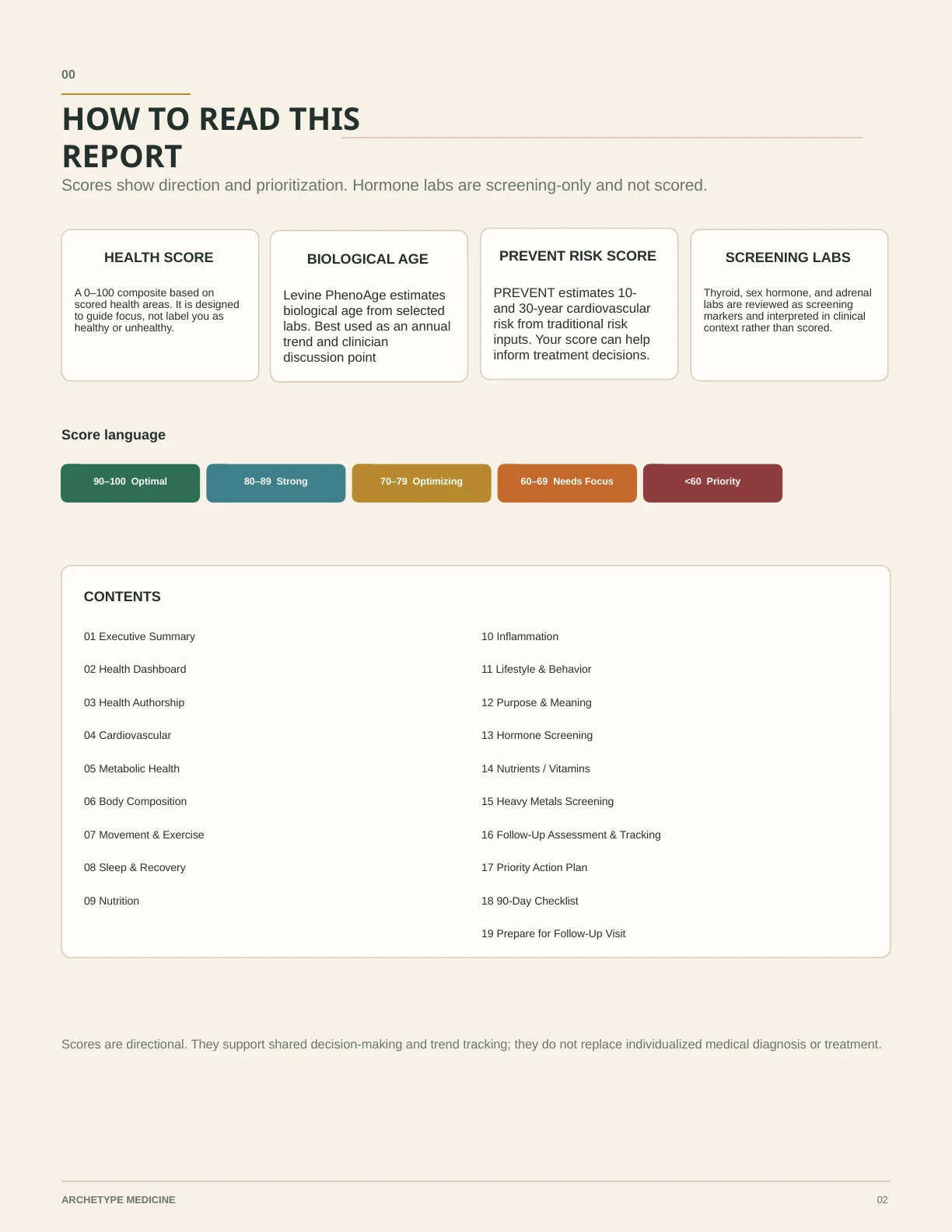
How to Read This Report
Before any data, the report lays out exactly what each score label means — Optimal through Priority — and how the scoring system is meant to guide focus, not render a verdict. This page makes the rest of the report legible.
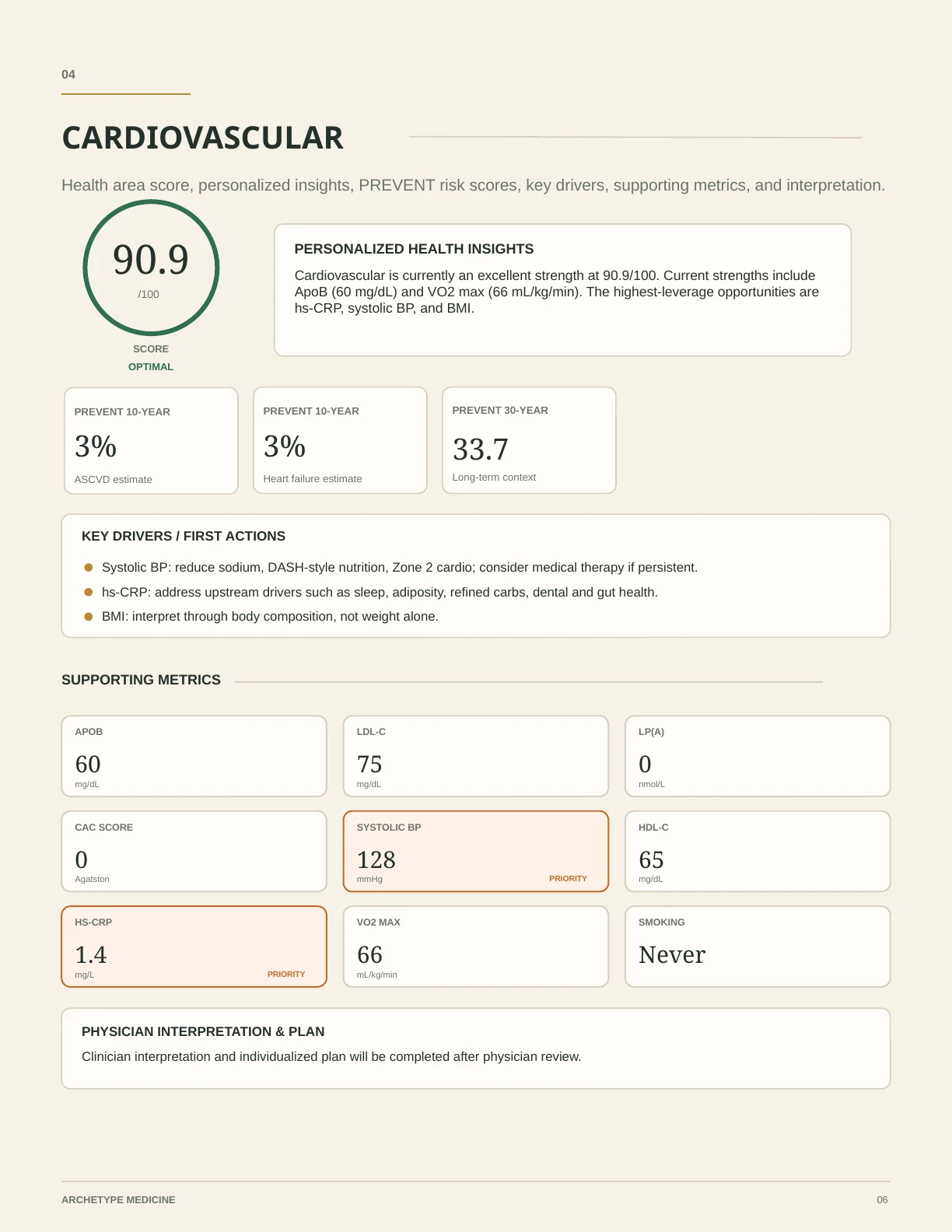
Cardiovascular
This sample connects ApoB, VO₂ max, CAC score, PREVENT 10- and 30-year risk, and systolic blood pressure with priorities for clinical discussion. The information assessed in your own workup depends on your needs.
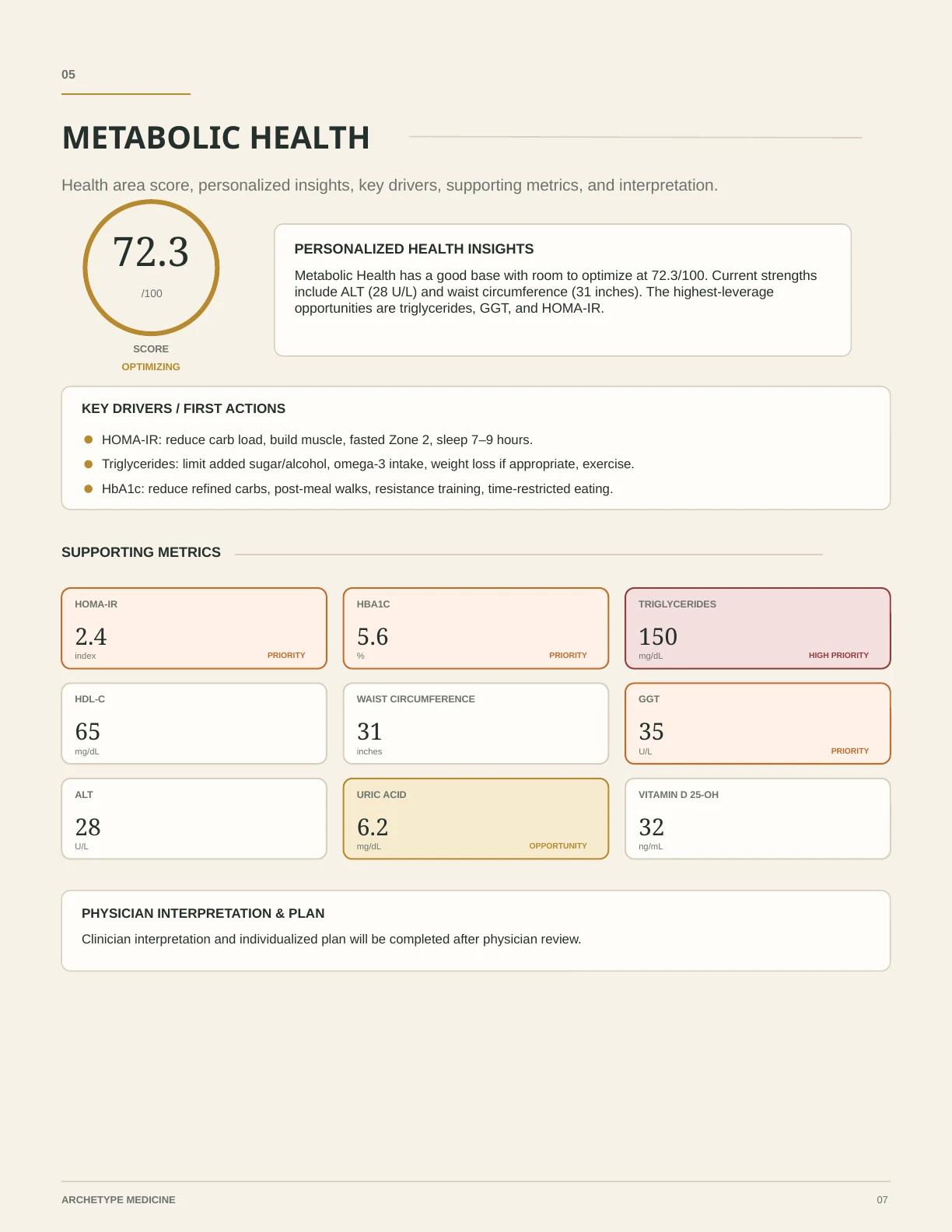
Metabolic Health
Where most patients have the most to gain. HOMA-IR, HbA1c, triglycerides, GGT — scored, sequenced by leverage, and translated into what to actually do about them over the next 90 days.
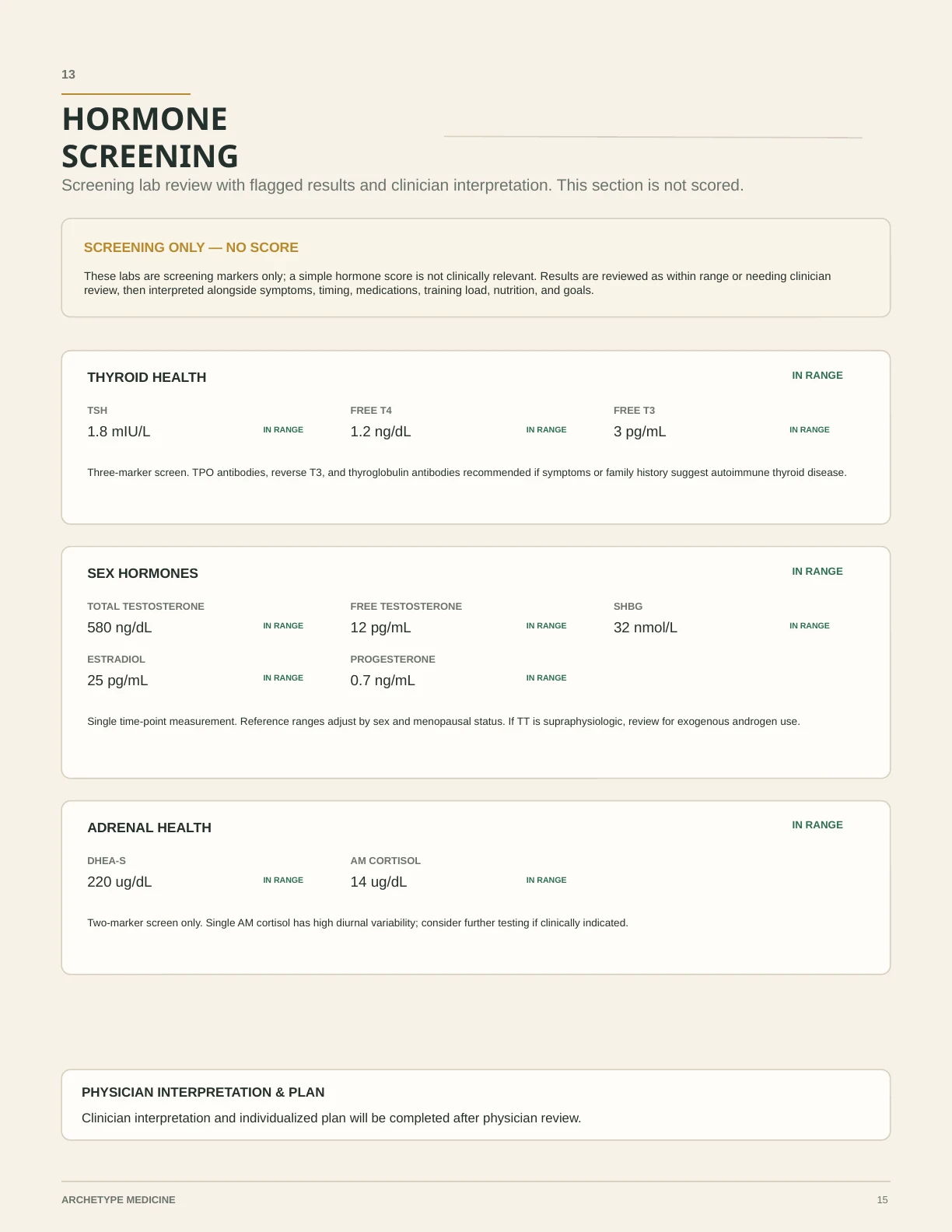
Hormone Screening
Hormone labs in this sample are reviewed as screening markers and interpreted in clinical context. Symptoms, life stage, medical history, and goals guide whether testing or treatment is appropriate.
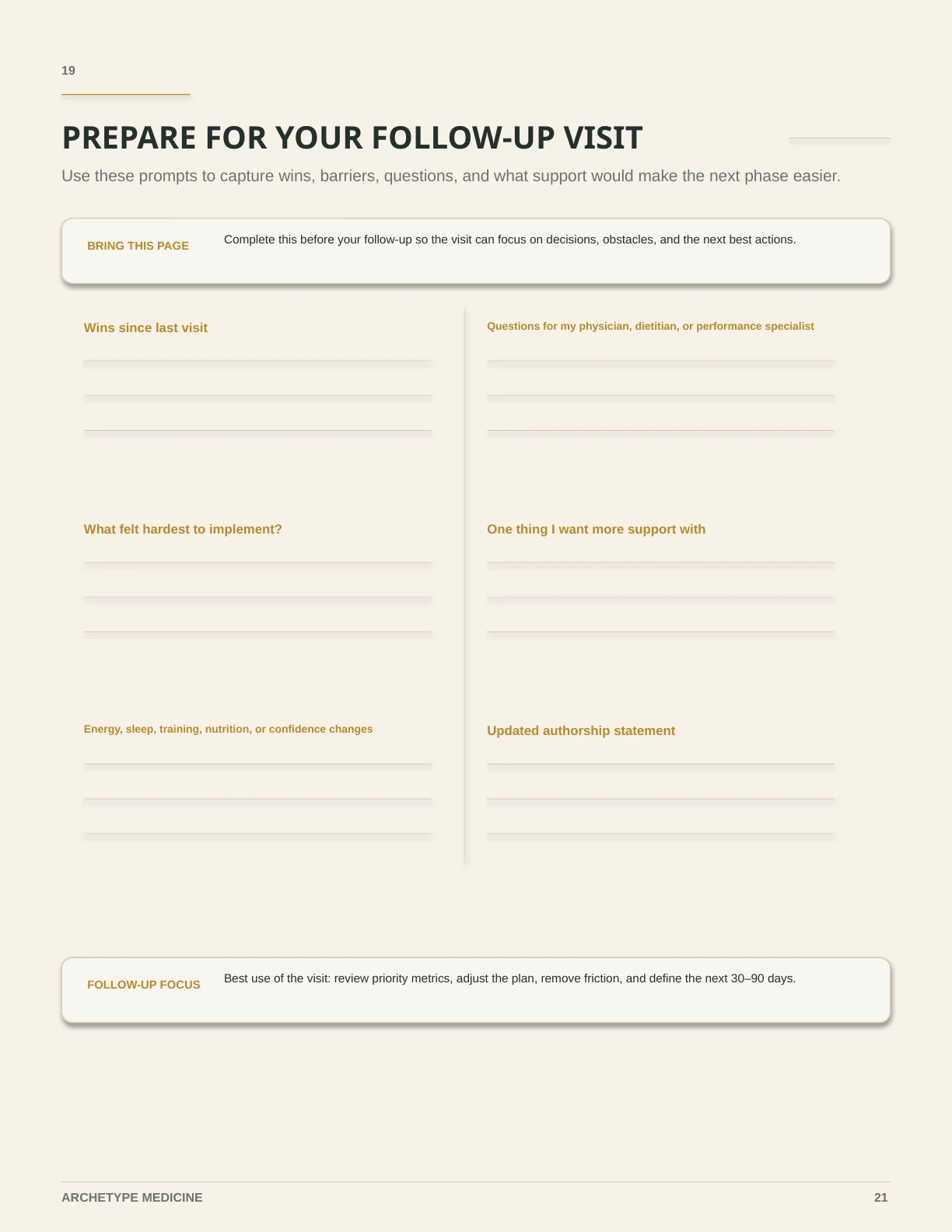
Prepare for Follow-Up Visit
The report is designed for continuity, not a single read. The final section prepares the patient for their follow-up visit — tracking what changed, updating the authorship narrative, and deciding what the next 90 days look like.
A note on scores: All scored areas are directional and designed to support clinical discussion. They represent a synthesis of objective data through a physician's clinical lens — not a diagnostic label, a definitive ranking, or a substitute for individualized medical evaluation. Scores are most meaningful in context and most valuable when tracked over time. This report uses de-identified sample data (TEST_M55).
What would help you understand your health?
Start with a conversation about your current concerns and future goals. We’ll discuss whether review of existing results, new testing, a written report, or ongoing support would be useful for you.
Request a Consultation